In the competitive aviation landscape of 2026, an Approved Training Organization (ATO) is more than a school—it is a high-precision business. With fluctuating fuel prices and tightening margins, ATO profitability depends on one factor: Asset Optimization.
A strategic flight simulator cost-benefit analysis proves that high-fidelity FTDs are no longer just “training aids”; they are the most efficient revenue generators in a modern hangar. At entrol, we design our devices to be the cornerstone of this financial shift. If you want to understand our philosophy of excellence, you can discover why entrol is the preferred partner for leading academies.

The cost of inaction: direct operational drains
Running a 100% flight-based syllabus creates three major financial “leaks” that can jeopardize the health of an ATO:
- Fuel and maintenance: the most volatile line items. Every hour in the air involves high-octane fuel consumption and brings the aircraft closer to its next mandatory (and expensive) overhaul.
- Asset depreciation: using a real H145 or Bell 505 for basic procedures is like using a supercar for a delivery service. You are burning “airframe life” on tasks that simply don’t require it.
- Security and insurance: operating a training fleet carries a high-risk profile. This translates into soaring insurance premiums and the constant need for expensive safety measures.
The solution: the entrol flight simulator
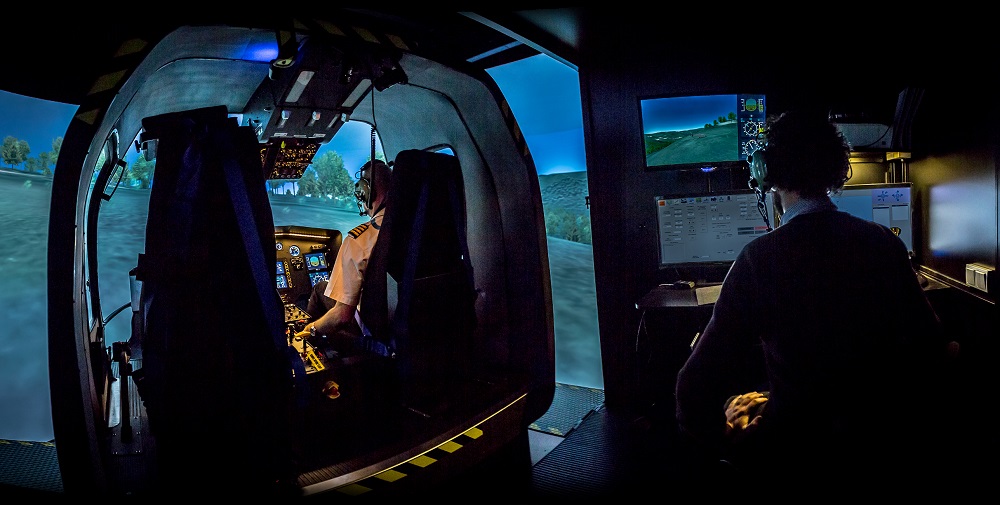
This is where the FTD becomes the backbone of a modern ATO. While some large-scale operators might initially consider a Full Flight Simulator (FFS), the strategic ROI for most training centers often tilts in favor of entrol high-fidelity FTDs due to their optimized simulator operating costs.
The financial advantages:
- Easier maintenance: unlike an aircraft, an entrol simulator doesn’t require “hangar time” for engine overhauls. Maintenance is largely software-based or involves modular hardware, ensuring nearly 100% uptime.
- Reduced pressure on the fleet: by moving 30-50% of the syllabus to the simulator, you preserve your real aircraft for final check-rides, significantly extending the life of your airframes.
- Maximum security: training for engine failures or “black swan” events in a zero-risk environment eliminates the possibility of hull losses or training accidents.
- The “Pre-Flight” bonus: when students finally step onto the real aircraft, their learning curve is already vertical. Having already performed their activities in an entrol simulator, they maximize every minute of expensive flight time.
How to ensure the ROI of your simulator
Investing in technology is only the first step; ensuring it pays for itself requires a tactical approach to EASA training efficiency.
A. Strategic certification
Don’t just buy a “box.” An entrol simulator with the correct EASA/FAA certification levels allows you to log the maximum number of official hours. This is the primary driver of ROI—converting sim hours into legal license credits.
B. Mission-specific training modules
Standard flight training is the baseline, but specialized modules (HEMS, SAR, Firefighting) allow your ATO to offer premium, high-margin courses. Representing real-world operations increases your market appeal and diversifies your revenue streams.

C. Didactic resources: the debriefing station
The ROI of a simulator is multiplied by the quality of the instruction. Advanced resources, like a dedicated debriefing station, allow instructors to review synchronized video and flight data. This “discussion on the reaction” ensures that one hour in the simulator provides the learning equivalent of multiple hours in the air.
The future: ESG and global backing
In 2026, access to credit and international recognition—such as the Santander Internationalization Award recently granted to entrol—often depends on sustainability. Shifting hours to an electric-powered simulator is a smart financial move that improves the school’s valuation and reduces its carbon footprint.
The most profitable ATOs in the world have stopped viewing the simulator as a “cost center” and started treating it as a yield-multiplier. By reducing simulator operating costs, preserving the real fleet, and maximizing student throughput, entrol FTDs provide the highest ROI in the simulation market.